Andrei Nita
Engineering Leadership, Data & AI Strategy
CTO who turns messy data orgs into investor-grade machines - 3× delivery, 60% cloud cost cut, 1→15 team built.
I've done this across VC-backed B2B SaaS companies from Series B to D - geospatial intelligence, AI platforms, subscription analytics. The pattern is consistent: fragmented tech, slow delivery, limited board visibility. The fix is always the same: clear architecture, the right data, and a team that executes reliably.

CTO for Data and AI-driven SaaS
I build lean engineering orgs, data platforms, and AI products that grow ARR and improve unit economics - for VC-backed and subscription businesses from Seed to Series D.
Who I work with
- I specialize in data-heavy SaaS, subscription, and intelligence platforms.
- My sweet spot is Seed to Series D companies needing investor-grade metrics, scalable architecture, and AI in production.
- I join as CTO, Head of Technology, or VP Engineering. Always with a strong data and analytics remit.
Track record
- I translate growth strategy into architecture, data, and teams that execute reliably.
- I've supported Series B, C, and D fundraising rounds - building the data rooms, board dashboards, and investor metrics that close rounds.
First 90 Days
How I approach the first three months in any engagement.
- Map current architecture, data flows, and delivery bottlenecks.
- Meet customers, GTM, and finance to understand value levers and pain points.
- Establish basic visibility: ARR, churn, funnel, and platform health dashboards.
- Define a lightweight technology and data roadmap tied to OKRs and commercial targets.
- Set up a predictable delivery model (teams, rituals, metrics).
- Prioritize quick wins (cloud cost cuts, key data fixes, or a focused AI feature).
- Start delivering high-impact roadmap items.
- Formalize data governance (access, quality, security, reporting).
- Agree ongoing cadence with leadership (monthly management reporting, quarterly roadmap review).
Capabilities
Architecture that scales without surprises
- Design cloud-native systems that handle 10× load without emergency refactors (AWS, Azure)
- Migrate monoliths to event-driven microservices without halting delivery
- Build data warehouses that serve both operational queries and board reports (Snowflake, Redshift)
- Ship CI/CD pipelines that make weekly releases the default, not the exception
- See real-world results from these architectural approaches.
Data that earns board confidence
- Build pipelines from raw → investor-grade metrics in weeks, not quarters (Airflow, Fivetran, Snowflake)
- Automate the finance and product reporting that consumes analyst time (Tableau, Power BI, Domo)
- Deliver ARR, MRR, churn, LTV, and CAC dashboards that hold up in a Series B–D data room
- Replace fragmented Segment and warehouse setups with a unified, auditable data model
- Learn about my 90-day approach to data transformation.
AI that ships to production, not just pilots
- Take ML models from notebook to production with monitoring and feedback loops in place
- Build knowledge graphs and NLP features that become product differentiators (Neo4j)
- Define the data foundation AI actually needs - before the model work starts
- Bridge data science and engineering so neither team blocks the other
- See AI implementation examples in my case studies.
Engineering orgs that don't need rescuing
- Build delivery processes where predictability replaces heroics
- Cut cloud spend 40–60% by treating FinOps as an architecture discipline, not a cost exercise
- Set up data governance and compliance that satisfies auditors without slowing the team
- Translate technology roadmap into board language - and back again
- Read my point of view articles on engineering leadership.
Selected Impact
Real results from applying the technical capabilities across different organizations. See my 90-day approach for how I achieve these outcomes, and explore more detail on the media & case studies page.
CTO - McKenzie Intelligence Services
- 3× engineering delivery speed
- 60% reduction in cloud costs while improving scalability and reliability
- Governance and reporting framework used for board and investor updates
Director of Data & Analytics - Builder.ai
- Board dashboards for ARR, MRR, churn, LTV, CAC, and forecasting - directly supporting Series B–D fundraising
- 75% reduction in manual finance and product reporting effort
- AI chatbot and knowledge graph capabilities launched in production
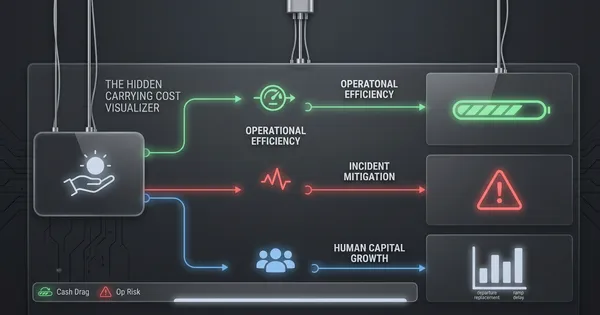
How Private Equity Actually Works
Private equity firms don't pick stocks, they become the company for five to eight years. A plain-English walk through LPs, buyouts, the fund lifecycle, and how the fees actually work.
Read article →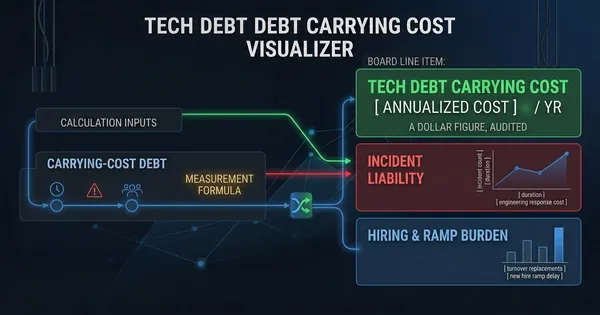
Technical Debt Isn't a Feeling. It's a Carrying Cost.
Technical debt isn't unmeasurable, it's unmonetized. A framework that turns velocity tax, incident cost, and hiring drag into one carrying cost a CFO can fund.
Read article →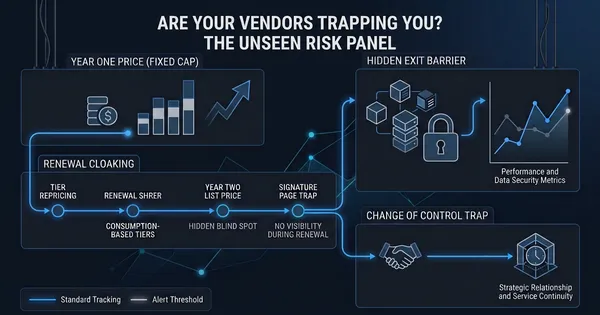
The Vendor Contract Red Flags Most Technical Leaders Miss
A fair price at signing doesn't make a fair contract. Auto-renewal windows, price-lock expiration, data portability, and change-of-control clauses decide what it actually costs.
Read article →